The moon, the moon.


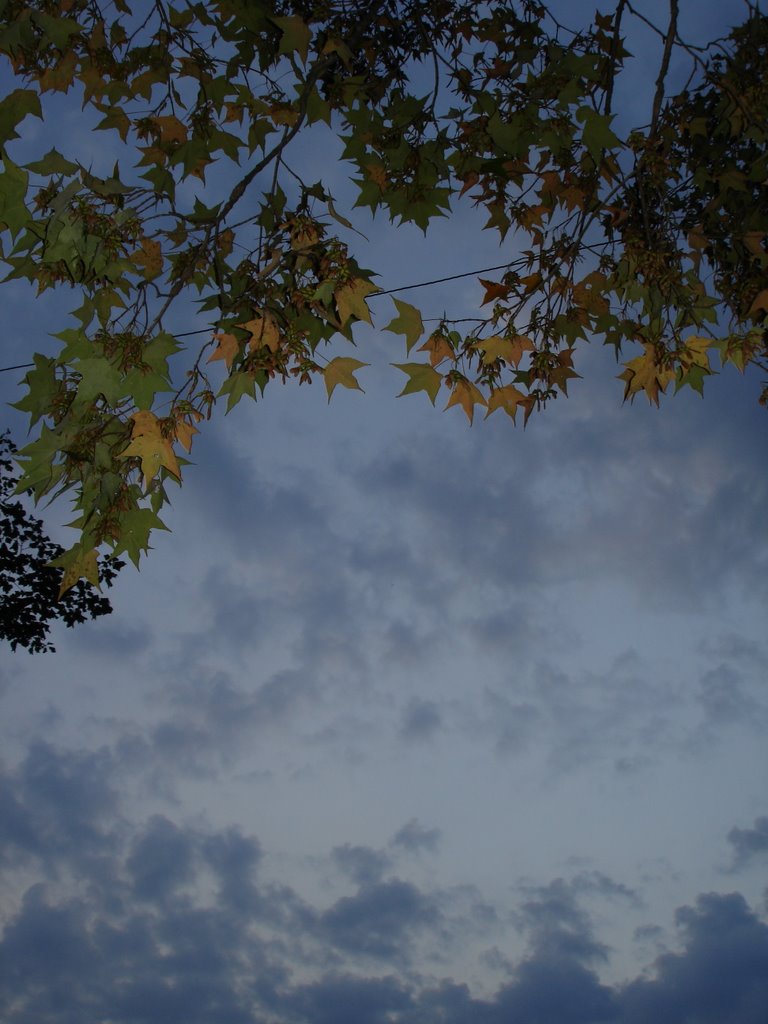
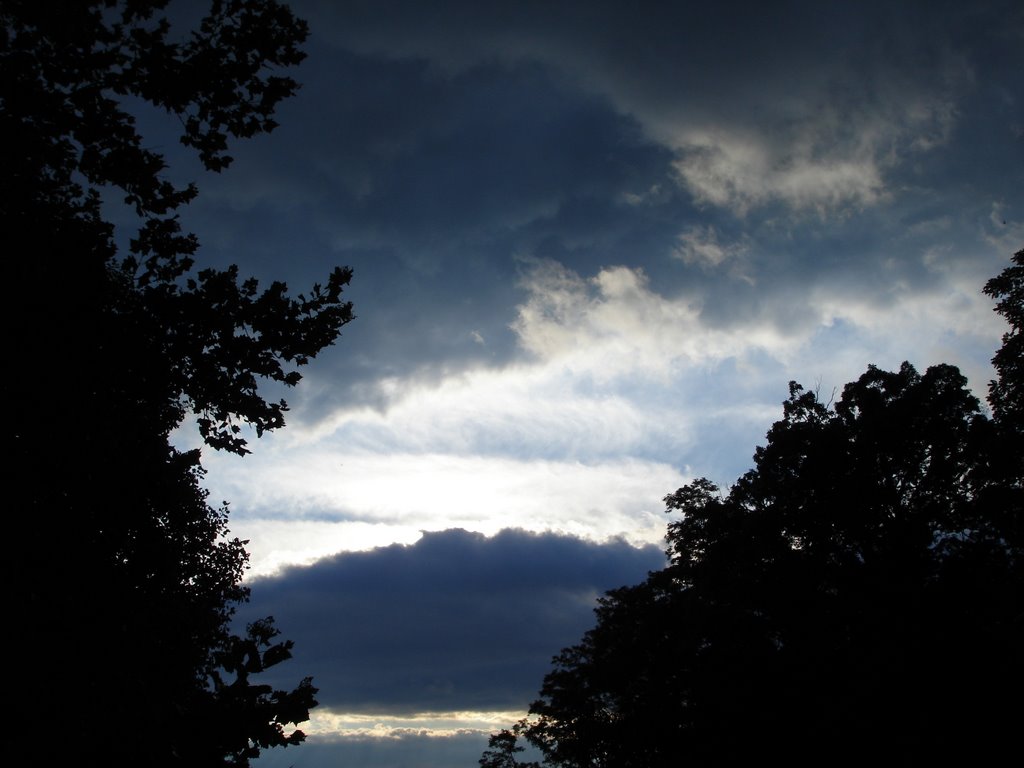
Tonight the moon was a fat white smear behind a heavy settling of cloud. Once I'd seen it, it took me a few minutes to realize that I was trying to turn it into lines of poetry. Instead, I'm going to leave it hanging here for a little while. That moon--if moon it even was--looked to me as though it had been made by a painter's whitened thumb. It was a soft and easy thing, its edges unfixed, its light beautifully fugitive. It hung, with its swipe of light turning all the cloud around it penumbral, over those angels on campus, and it laughed at their boundedness, their concrete anchors to the ground. And it has laughed me gently all the way home to bed, and to sleep.

source for tonight's image: Luigi Serafini's deeply weird Codex Seraphinianus, about which you can read here.

The pleasures of being read.


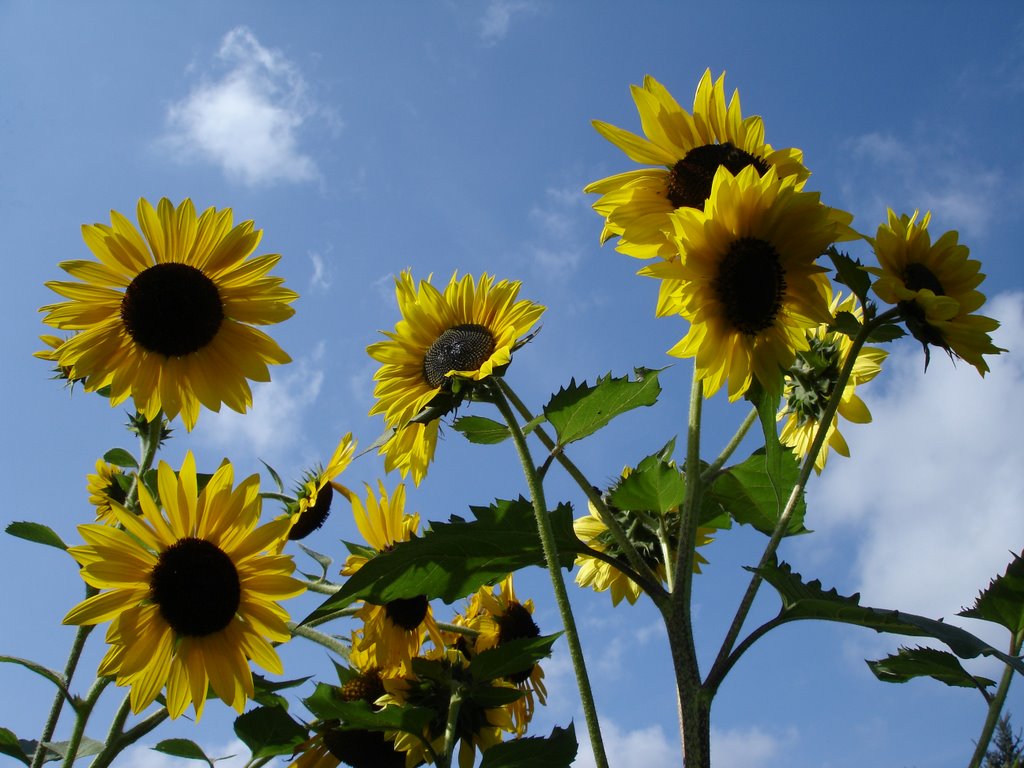
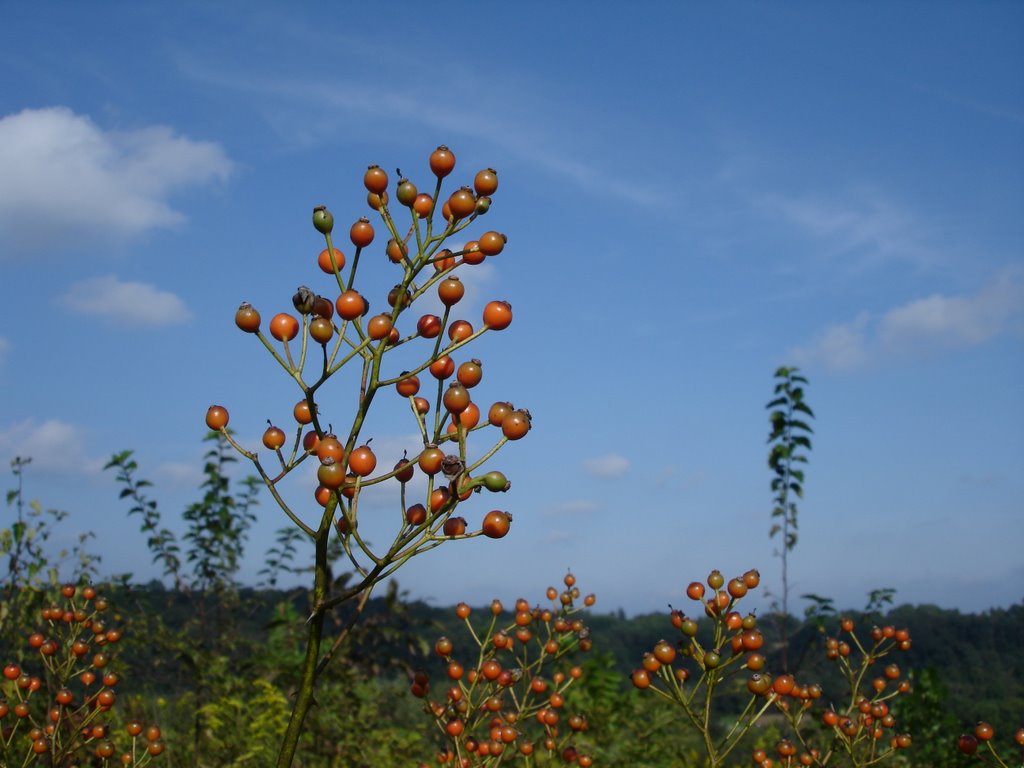
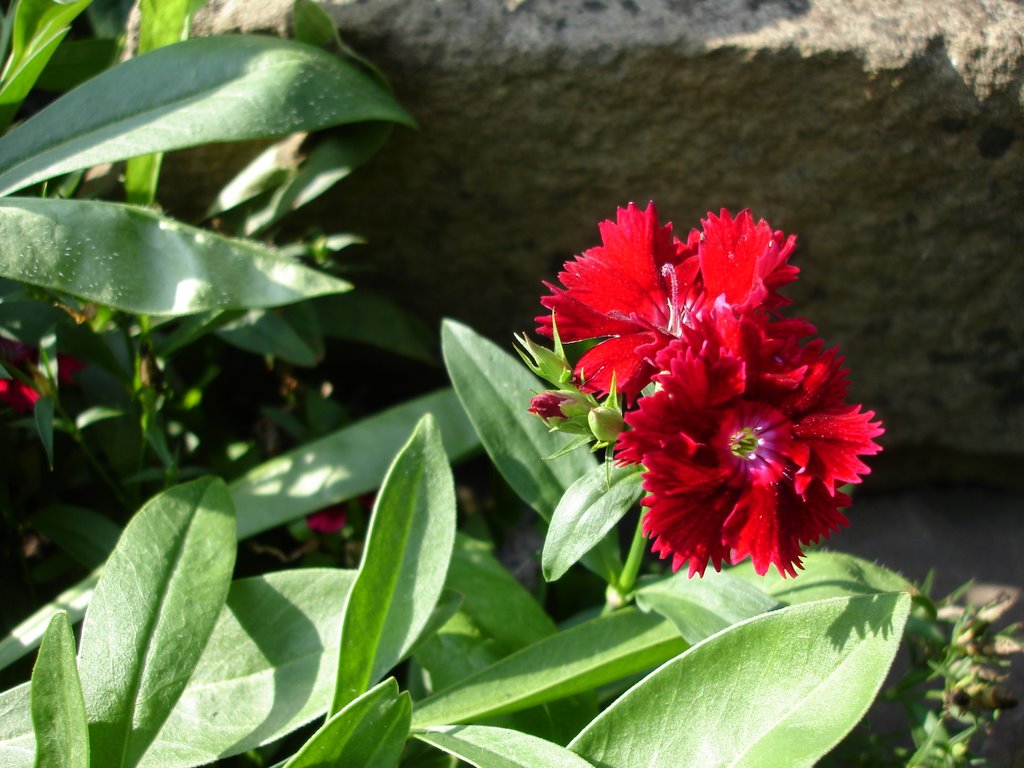
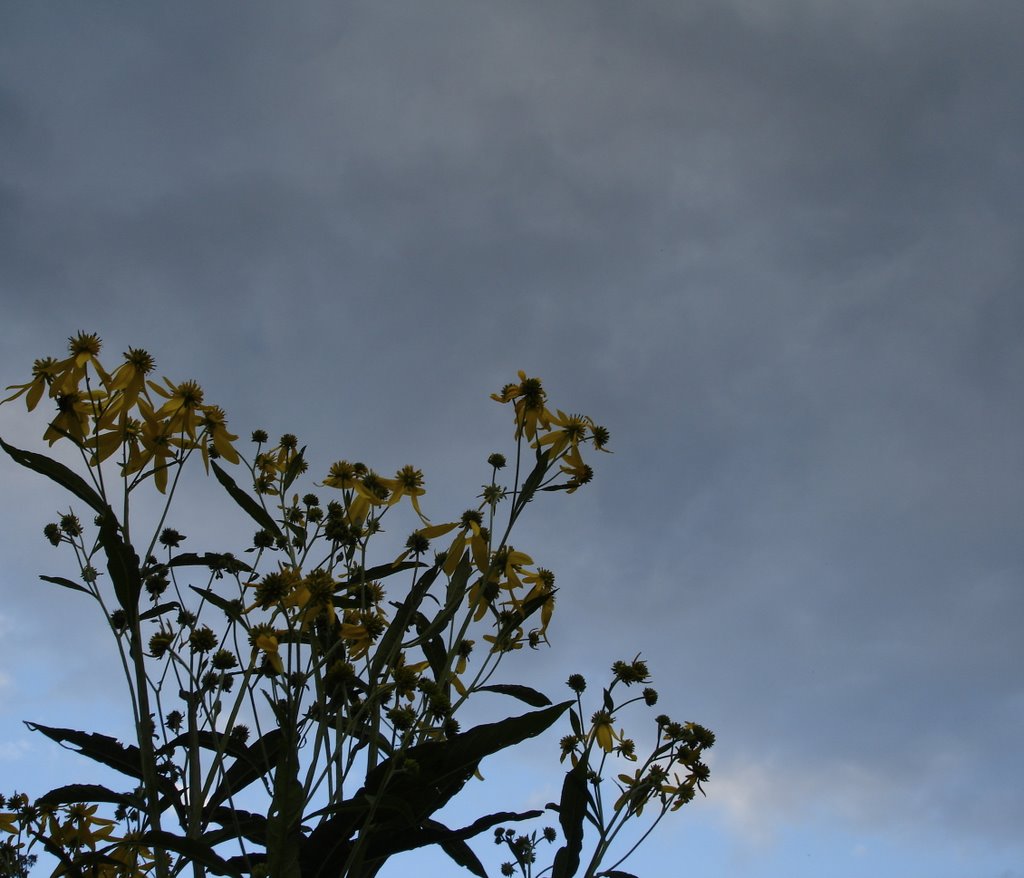
Today my heart is shining this singing shade of gold, this stand of sunlit yellow reaching. By the time yesterday closed down, I was exhausted yet again--hence my refusal to trust myself to write even a few words to caption yesterday's picture--and that very pleasant exhaustion stemmed directly from a second day of expected and unexpected and expected-but-then-unexpected-but-then-arrived people appearing at my kitchen door. (I don't think I've ever told you that my house's two doorbells have completely different rings, which means that I would always know where people arrive at my house, if I could only remember which ring is which. Neither is, as I just mistyped, rich.) A multitude of funny things cheer me this afternoon: the particular slant of sunlight through a back window onto my dining room table, which is itself pleasing me just by being in a different place than usual because of the party I threw a week ago; the lyrics of Erin McKeown's song "Air"; my tortellini dinner; my laundry's half-doneness; Hem's arrival in Cleveland in two weeks; the leaves' continuing to start to fall, little by little; the errands I'll have to run before I even have time to finish this writing. And the pictures (some of very strange plant forms indeed) that I took yesterday while I walked at Kenyon's environmental center with my Columbus friend yesterday after her Gambier meetings wrapped up earlier than she'd thought they would.

But what really has me radiating is a pair of experiences I've had with being read in the past two days.

One is a figurative reading and is the continuation of a small, steady glow that I'm cherishing: a new friend has expressed concern twice, in a relatively short time, that I might be working too hard and not taking care of my surroundings. Somehow, these two instances have made me able to reevaluate a somewhat tortured moment from this summer when I was unable to accept a similar expression of concern from my mother, channeled (as was one of this weekend's statements of concern) as a worry about the way I take care of my house (or, more properly, don't take care of my house). I fell pretty hard onto a big, thorny pile of denial when she shared this worry with me back in July. But I think there's something to it. (So, sorry for the denial, Mama.) I think I've been slipping into a state where I've been unable to imagine that it could matter to anyone, least of all myself, that I live in a comfortably clean dwelling. To be reminded that it might indeed matter, in a non-judgmental way, even to people who haven't known me long and don't know me well, is helping me realize that it actually does matter to me that I might be spending so much time and attention on everything but myself and my dwelling that I've stopped even imagining a better way I might live--not to make anyone else happy but to please my adventuring self.

Hence the laundry-doing. And the dish-doing. And, to some extent, the errand-going I'll soon undertake, which will involve acquiring ingredients with which to prepare some meals that will actually carry me through the week with some degree of energy (and, I can only hope, grace).


The second reading is a literal one. I have recently begun writing for another blog, without the cover of a pseudonym and in full embrace of my identity and authority as a Kenyon professor. I've been startled to find just how much I care that that blog's readership cares about what we (collectively) write. And I've been very startled by my ecstatic response to finding out today that my latest post, a mini-essay about one of my favorite texts in the world, has been linked by a couple of other blogs' daily link round-ups. Suddenly, I have yet another new vision of myself as the bona fide writer I've always wanted to be, even when I haven't wanted to be one at all. (I do realize that you've been watching these visions wash over me all through this calendar year.)

As I see it, it's all too easy for the self-aware academic writer to fear that her work, no matter how lucid and lovely it might strive to be, is not likely ever to reach an audience that could fill even a small lecture hall. Recognizing this aspect of the academic writing career, I have done my best to make my articles and essays provocative and edifying to specialists but still approachable by non-specialists. Often, I write with my parents in mind: both are fabulously smart, but neither is possessed of literary critical or theoretical terminology (the stuff that so often gets derided as jargon but is, if used appropriately, simply my field's advanced technical language, no different from the advanced technical language of scientists). And so if I'm making an argument and telling a story, I try to make sure that it's teaching my readers at least some degree of the knowledge they'll need in order to understand what I'm doing. But it's tough, because articles can only be so long, and peer reviewed journals are, in fact, aimed at a particular readership, which tends to be made up of people who are well versed in literary criticism and theory and history.

And so what I'm loving about writing at this other blog is the same thing that I've loved about writing the literary posts I've done for this one: the chance to back up and write things that (I hope) are friendly to people who love words but don't study them for a living--people who might have studied literature in college, or might not even have known that they wanted to study literature in college, and who may not get as much literature into their lives now as they wish they could. It's amateur criticism, in some ways, and I mean that in the oldest sense of "amateur": it's criticism that I get to produce sheerly for the love of what I'm discussing, and sheerly for the love of the discussion itself, and sheerly for the hope that it will reach others who might discover that they too love this stuff. My writing there all gets informed by the same kind of patient, careful attention to detail that I do my best to bring into all of my work, but somehow this off-hours writing has been giving me a slightly different angle from which to look at the reasons I do what I do, and the reasons why a larger-than-just-academic audience might be interested in learning some of the things I know. And thus it's helping me think about ways that I might be making my slow and steady way toward a particular kind of professional writing that might accomplish something different than what I've previously imagined for myself.

I am always telling my advisees about the importance of learning to follow their instincts. Sometimes it amazes me to find out how much I'm still learning to follow my own, which seem to keep cropping up, unexpectedly, just when I think that I've seen the last of them.

A postscript of notes from back in May, at the turn into this season we're about to leave:

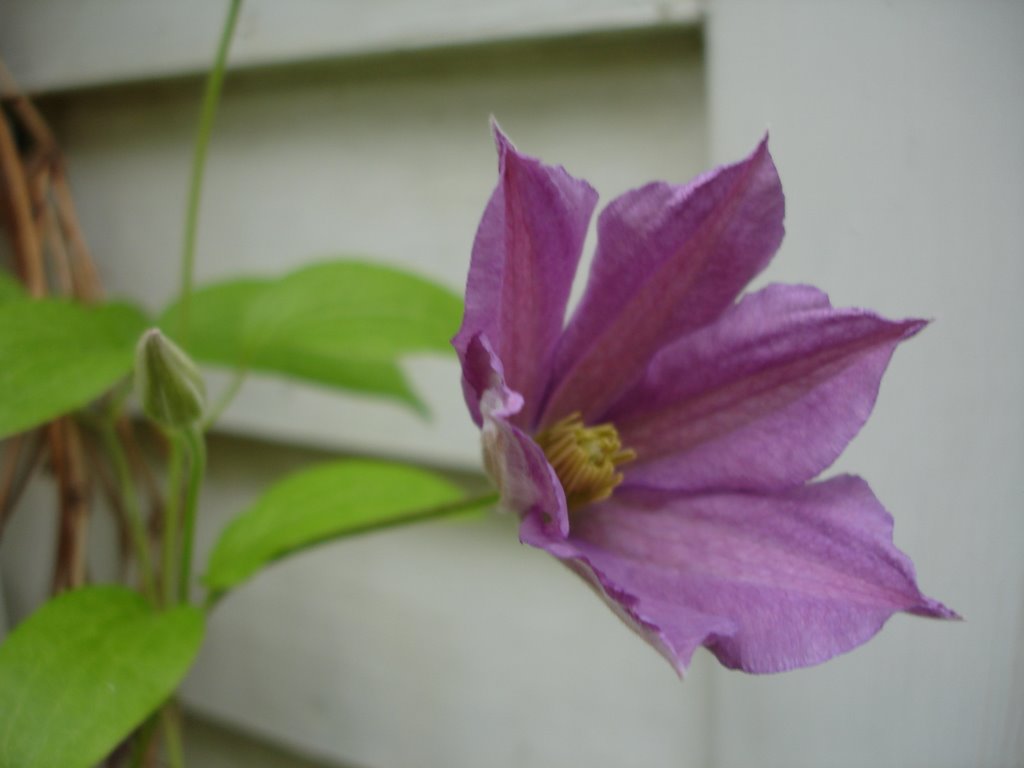
The evening goes white before it blues. The irises, beginning to unfurl, take on a deeper shade of lavender. The season is still on its way up, not yet in the hot beginning of decline. The moon is waxing. It will keep growing bigger in our sky, until it starts to wane again. And then it will start all over.

I am a thing of ceaseless hoping.

The rising of the ground to cloak the cooling sky.


At the partway-through end of yet another long day--up at 7:15 a.m., grading and meeting and preparing and teaching and conferring until 5:30 p.m.--I decided to take myself out for dinner. Again. I have been doing this every night, with the good news being that I'm actually hungry for dinner and that I'm supporting an important community establishment. You know the bad news side of eating in a restaurant every day. I don't need to tell you.

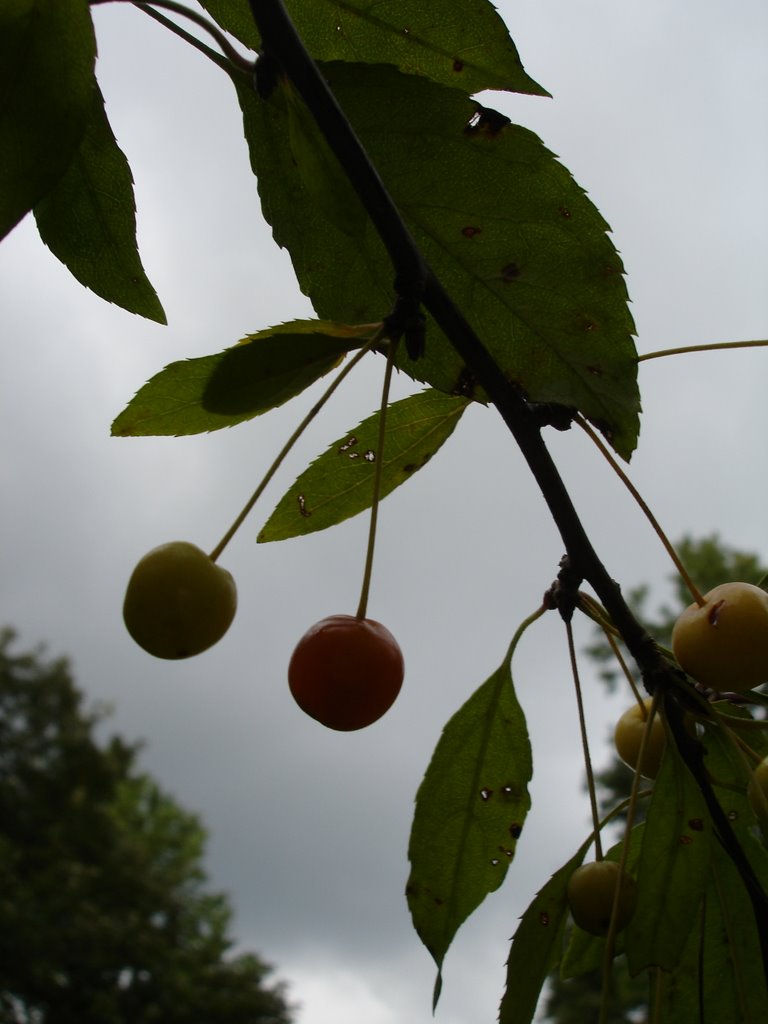
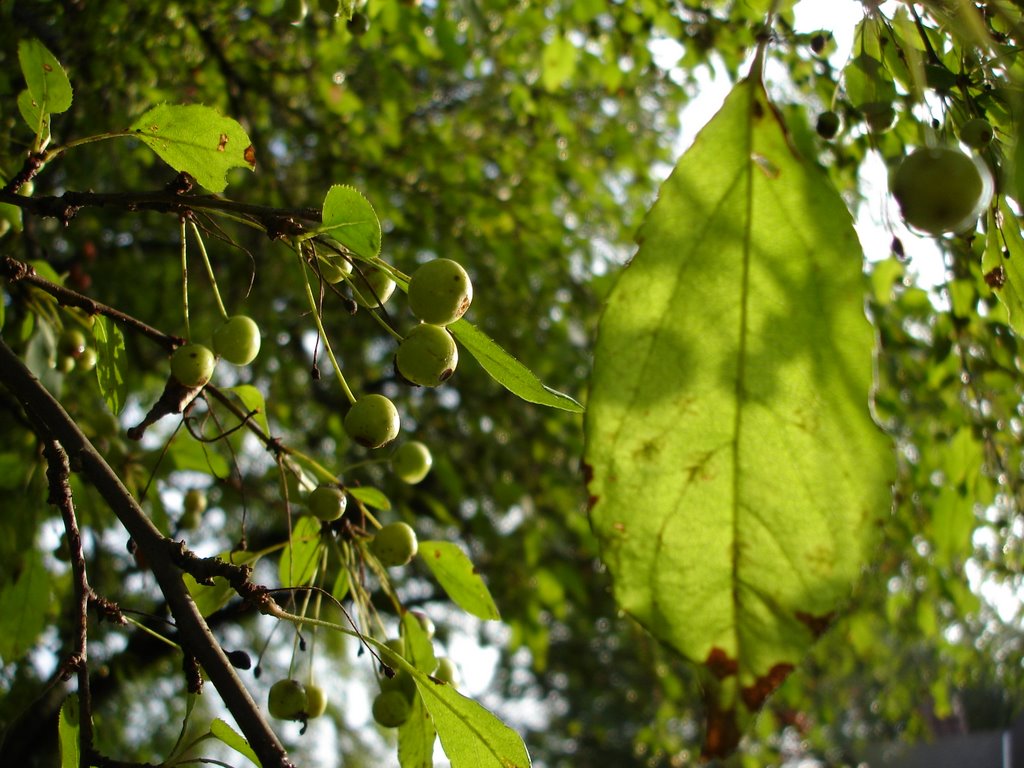
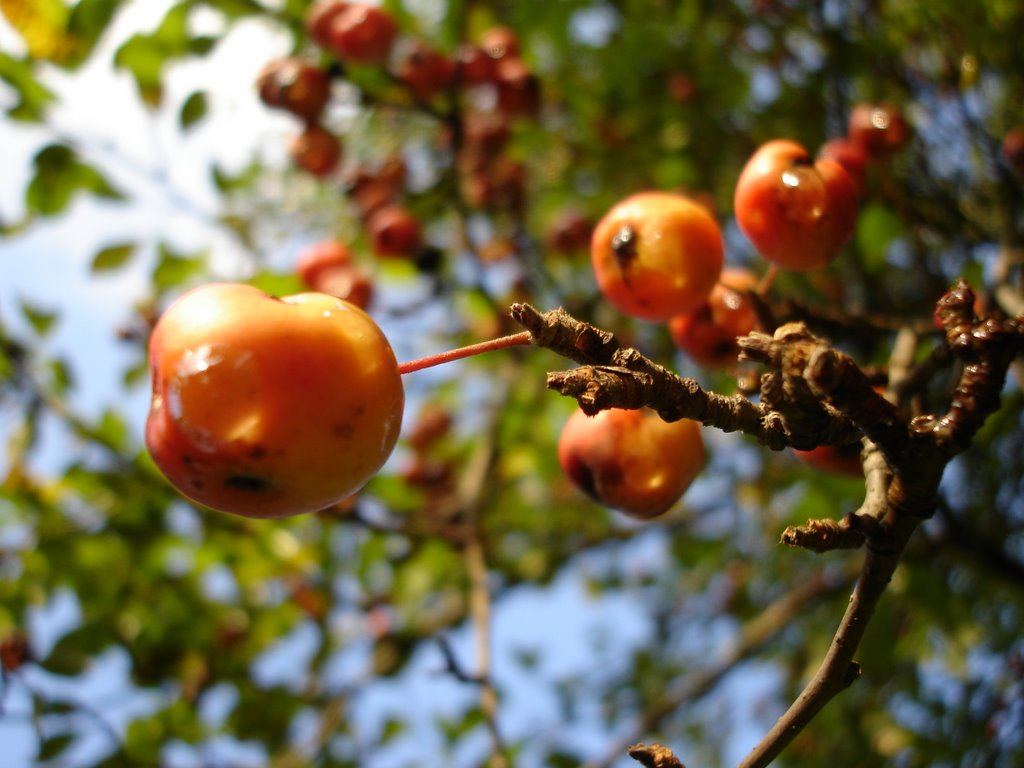
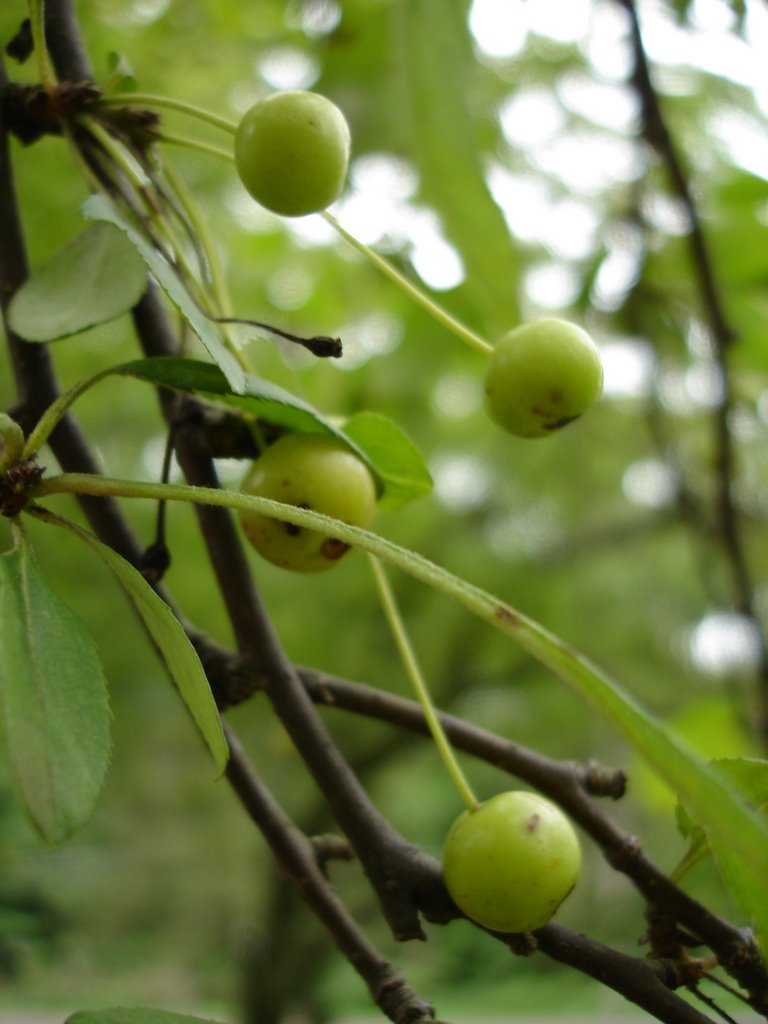
On the way to the coffeeshop, I was entranced by the remnants of our day's rainstorms hanging about on the crabapples' tiny fruits.


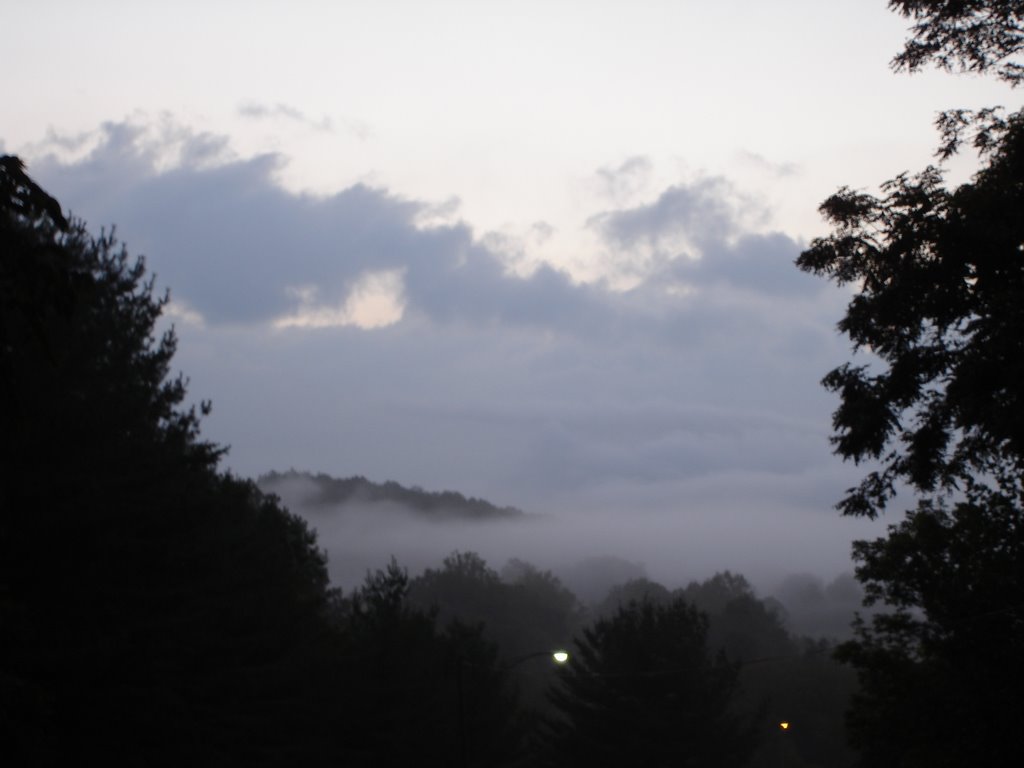
When I'd satisfied myself temporarily that these drops of water wouldn't disappear as if they'd never been, I headed on along to order from the menu that's been feeding me for ages. And dinner was lovely, and wandering and reading in the bookstore were also lovely. But it all paled to what happened next, as I wandered back toward the officehouse with a canvas bag over my shoulder, full of reading materials and of expensive chocolate. Down the hill, looking out to our western vista, I could see the tops of the valley trees being overtaken by a fog rising off the fields and hills across the state highway from campus. My evening shifted emphasis; I strode down the hill in pursuit of the white fog and of what it was doing to the trees and the hills.


What I learned is that it's not easy to photograph fog, even if you do hold your breath while you try to take a picture in low light. And so I set out to satisfy myself with impressionistic shots.


By the time I turned around to walk back to the east and up the long, winding hill to campus, the fog had crept up behind me and around me as well. The funny thing about fog is that it's difficult to see that you're in it until you're not in it anymore: the closer I got to the field I wanted to photograph, the more it appeared that I was standing in relatively unfoggy territory. The further I got, the less I was able to get the pictures I wanted. As I walked back toward campus, I realized that whereas I was completely clear and visible to myself, I would not be quite so visible to oncoming traffic. What I realized, in other words, was some version of what's true at every moment of our lives: the terrible thing, the cataclysm, could be hurtling along through the fog at any second. Tonight, the terrible thing was not hurtling toward me; I am still loving the fog, and the evening of writing that my midweek suddenly made possible, when I returned to the officehouse around 8:30. In the near-dark. Because that's the part of the year we've now reached.

And now, to sleep, in this dampening, cooling night. All the streetlights are fuzzed stars in the lowered atmosphere.

Further adventures in tree knowledge.


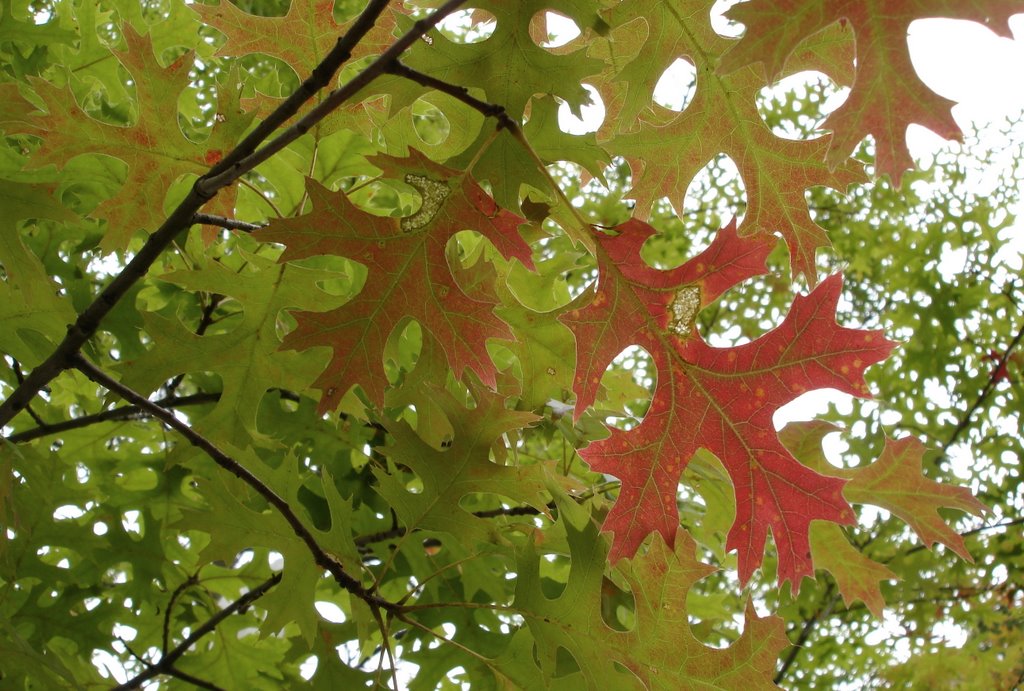
Looking at pictures from yesterday, before the rain came back to soak us all day today, it occurs to me that I no longer know--if ever I did--why leaves turn red in fall. And so I do what any couch-bound questioner does: I google. And I learn, among other things, that red pigments, caused by anthocyanins, may be a tree's last gasp to protect itself from an overdose of light, once its leaves' metabolism starts to decline. And I also learn that some French scientists have hypothesized that brilliant leaf color may serve some of the same functions as the bright hues of male birds' plumage. It may be the case that my trees are showing off so that our remaining insects won't regard them as vulnerable, able to be picked off or decimated. I love that possibility. Perhaps I should throw out some red leaves, somehow.

You should have heard the crickets ringing.


They were grinding their high whistles in the night when I emerged from my final commitment for the night. They continue.

All day, I've flickered back and forth, feeling an obligation to remember what was happening five years ago and feeling the danger that the very act of remembering might turn solipsistic. It doesn't matter, I thought as I prepared to leave for my morning class, that five years ago I was sitting in an office with many secretaries, our heads all bowed as we listened to a radio tell us that one of the towers was falling, or that I spent most of the morning watching a huge television (once I remembered where the television was) with lots of students, no one knowing what was going on, or that I still swear that my eyes made the second plane come out the other side of the building, like the bullet coming out the other side of the apple in Egerton's photograph, when I first saw that impossible footage. The second time they played it on whatever news channel we were watching, I was shocked that it buried itself in the building, and shocked that my mind had done what it did.

I remember absurd things from the morning: I was wearing a black skirt and white blouse, very simple, because I had wanted to wear my red patent leather shoes. It was the third day of classes, and I was teaching Frankenstein in an 8:40 a.m. seminar. We started right on time and spent the 75 minutes mapping on the chalkboard all manner of ideas about Victor Frankenstein and his creature. My left bra strap kept slipping down inside my blouse; every time I had to fish for it, in what I hoped was a clandestine way, I thought of the high school teacher everyone called Looney, and how they laughed at the fact that she would reach inside her shirt to pull up her bra strap. The classroom was breezy and lovely, and though I was having a hard time finding our discussion passages on each page of Shelley's novel (because I had overannotated my copy, in my concern to know the text flawlessly), I felt as though I were about to hit my stride for the semester. I let everyone out at 9:55, sending them away with a writing assignment due on Thursday.

The next class of students filtered into the classroom a few at a time. "Have you heard what's happening?" one of them said.

Over the next few weeks, I built myself a small archive of print media coverage of the event: The New York Times from a few key days; Time and Life; The Chronicle of Higher Education, The New Yorker with Spiegelman's perfect cover ("I knew he'd come through for us," my beloved Brooklynite e-mailed to say, when her copy came in the mail). This gathering, I told anyone who listened, was an act of hope: I wanted to believe that we weren't going to be annihilated (by others or ourselves), that there would be people, or just my future person, who would look at my pile of early reportage. I finally had to hide all of these magazines and newspapers in my closet, because I couldn't stop looking at them, couldn't stop feeling terrible about feeling terrible even though I'd lost no one in the towers or in the Pentagon.

And in fairly short order, I found that there was nothing for me to say, no voice to add to what the voices were recalling and proclaiming, and yet I, like so many people, just kept talking about it: where I'd been, what I'd heard, how I found out, how I felt. Five years later, I still wonder whether someone somewhere still needs me to say my part of the day aloud. And I'm nearly sure that the answer is no, but I say my part, or at least a part of that part, anyhow.

Daniel Tobin's "As Angels in Some Brighter Dreams" (Hudson Review, summer 2006) catches something about the aftermath, describing the city as

a landscape of storefronts and row houses,
Apartment prospects with their towers
Of skyscrapers across the teeming river,
And that absence soaring above the harbor
Like a monument to anyone's lost world.

Gina Franco's "That Cried to the Whole City 'Sleep No More'" (Georgia Review, winter 2002) also calls back for me something just right about that morning and what it wrought.

Fall, that coming ghost.


When I walked through town tonight, a breeze brought down a further shower; all my paths start to become patched in reds and browns, and it seems to be coming too soon and yet not soon enough.

* * *

Thomas Hardy, describing the effects which a new life in a dairy district has upon a 26-year-old Angel Clare, in Tess of the d'Urbervilles (1891):
He grew away from old associations, and saw something new in life and humanity. Secondarily he made close acquaintance with phenomena which he had before known but darkly--the seasons in their moods, morning and evening, night and noon, winds in their different tempers, trees, waters and mists, shades and silences, and the voices of inanimate things.

Ah, indolence.


I am tired enough that I just awoke to find this text window full of slash marks (showing where my right ring finger tried to think for me when I clocked out for a little). Now those are gone, and so will I be, in moments.

I would have bought the flowers myself, from the man who sells zinnias downtown, but that was around the time I was baking pies and getting ready to make chili. Instead, there were no flowers--how does one delegate zinnias?--but no one at the party seemed to mind.

What I would have awakened you to say:

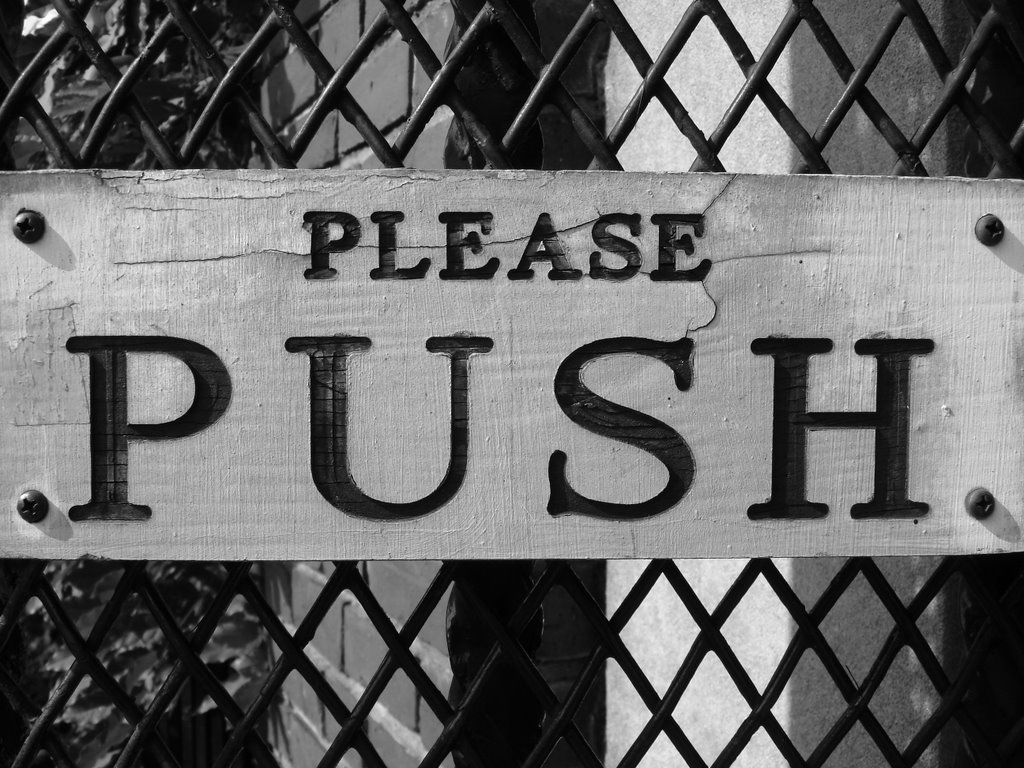
Get up and come outside, come on, come on, come for a drive. Don't look at the clock. Just trust me: get up. Not far from here is a field of hills sleeping under a thin sheet of fog, and the fog is flat and six feet off the ground with which it is parallel, and I will not let you sleep through its slumber. And I need you to hold the camera while I drive: I need your eyes to be as good as mine, to catch that that barn that only has one windowpane left has gone silver again and that the soybeans that have started to yellow this week are a wiser gold in the night and that the just-past-full moon has turned everything a cooler shade of quiet. And I need you not to say What? when I can't help but say Ohh under my breath.

I can do the midnight grocery trip alone, can even ring up and bag all my hundreds of dollars of party groceries alone because no one seems to be working a register. I can load the car alone and leave the parking lot alone. For that matter, I can learn the fogged fields by heart alone, too. But that's where I stop wanting to, where gratitude for the deep breath of quiet I just bought myself because of whatever possessed me to drive the moonlit backroads to Kroger at 10:30 p.m. starts tingeing with desire for enough boldness to find someone to pull out into that silvered rising fog with me.

And that's where you come in.

Again a spider.


He has come outside to ask me a question, and so I answer it, and then I show him the web. "I've never seen anything like this before," I say (again and again, to anyone who will listen). "You haven't?" he says. We are bending slightly into the bushes, peering at it. I am still holding my camera, finger crooked through its case's belt loop. He is the second person in close succession whom I have subjected to the web, in these day-ending moments that turn the light from afternoon to evening. He gestures over the inverted bowl of the web's main filaments, and I see that I was mistaken last night, to think they shaped a sphere. "These others, out here," I mishear him say, as he gestures again, "are for suspense."

Light up or go home.


On the Q train, going home from the Union Square Barnes and Noble, my toe still smashed and her poetry books in hand, I say, "When I list all the poets whose work I've been buying this summer, trying to learn all these things I never learned, I think it's strange that they're all men." We are standing, holding the same metal pole, as the train rushes express through Prince Street, shuddering onward toward Canal. "It's what we're taught to like, isn't it?" she says. She lists many women whose books I do not own, says, "And have you read Mary Oliver? She's terrific." And of course, I know, of course, I've read Mary Oliver--I've even posted "Daisies" for you. But I don't have her work, not in my head, not in my library. (And it was one of her books we had gone to search out at the bookstore in the first place; I remember this now.)

Tonight after dinner, a stop at the bookstore, a quick whirl past the shelves, where two volumes of Oliver's poetry all but grasp my arm as I start passing them by. The paperback volume is now mine. But the hardback yielded me my new motto, perhaps the first line I can actually imagine wanting to have written on my body. See if you can figure out which one it is.

What I Have Learned So Far

Meditation is old and honorable, so why should I
not sit, every morning of my life, on the hillside,
looking into the shining world? Because, proper-
ly attended to, delight, as well as havoc, is sug-
gestion. Can one be passionate about the just, the
idea, the sublime, and the holy, and yet commit
to no labor in its cause? I don't think so.

All summations have a beginning, all effect has a
story, all kindness begins with the sown seed.
Thought buds toward radiance. The gospel of
light is the crossroads of--indolence, or action.

Be ignited, or be gone.

--Mary Oliver

And then the most extraordinary thing of the day--then, after I'd left you this poem, after I'd left the officehouse for the night, after I thought I knew what I was going to do next: then, the moon stopped me right there in my walk, and as I turned toward the car so that I could get out my camera, and as I saw the dew on the bush to my right twinkle past in my turning, and as I started to move past the bushes that had been to my left: then, a spider's web in dimensions like none I've ever seen, a web so complexly involuted as to be a sphere inside a cube held tight at all eight corners, suspended there with a spider at its center. I called out to a colleague who was leaving his night seminar. For a moment, we bent together and watched the web's lamplit stillness. Finally, my colleague said, "I wonder if it will still be there tomorrow." There was nothing else to say, and so we both went home.

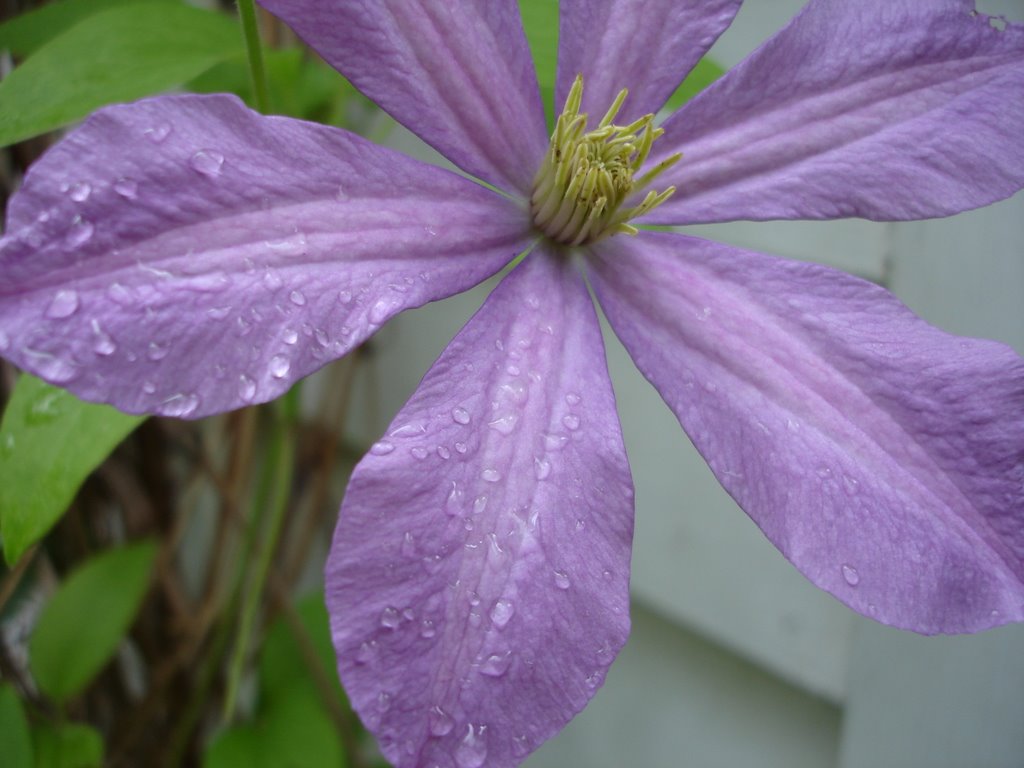
Evening walk with flowers.


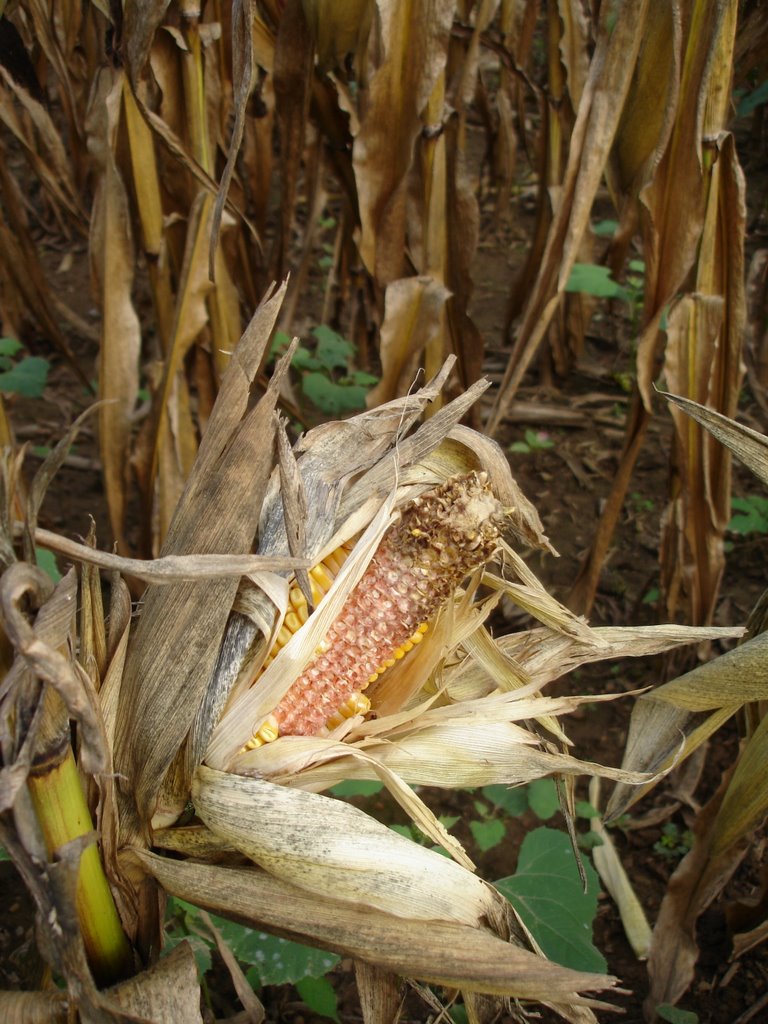
By the time we neared sundown, I had grown so restless that I could no longer sit still and decided (as if I had much choice) that I would go out with the camera and see what I could see. I strode away from the officehouse and headed for the cornfields across the road, yet another place where fall is making its approach known.


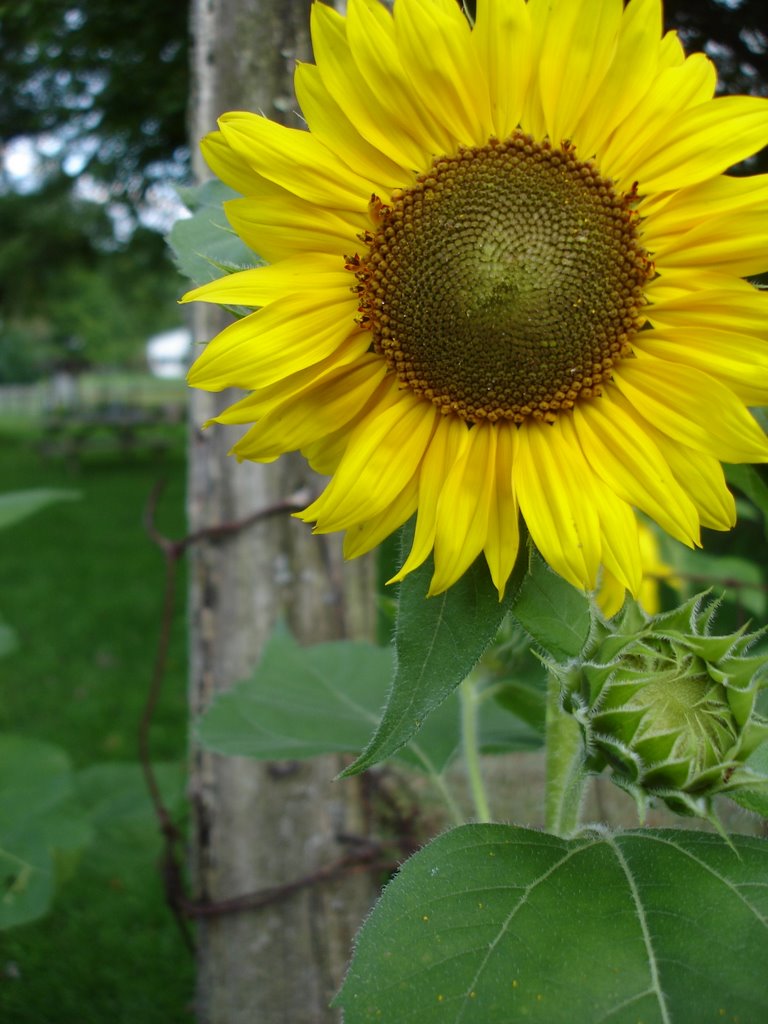
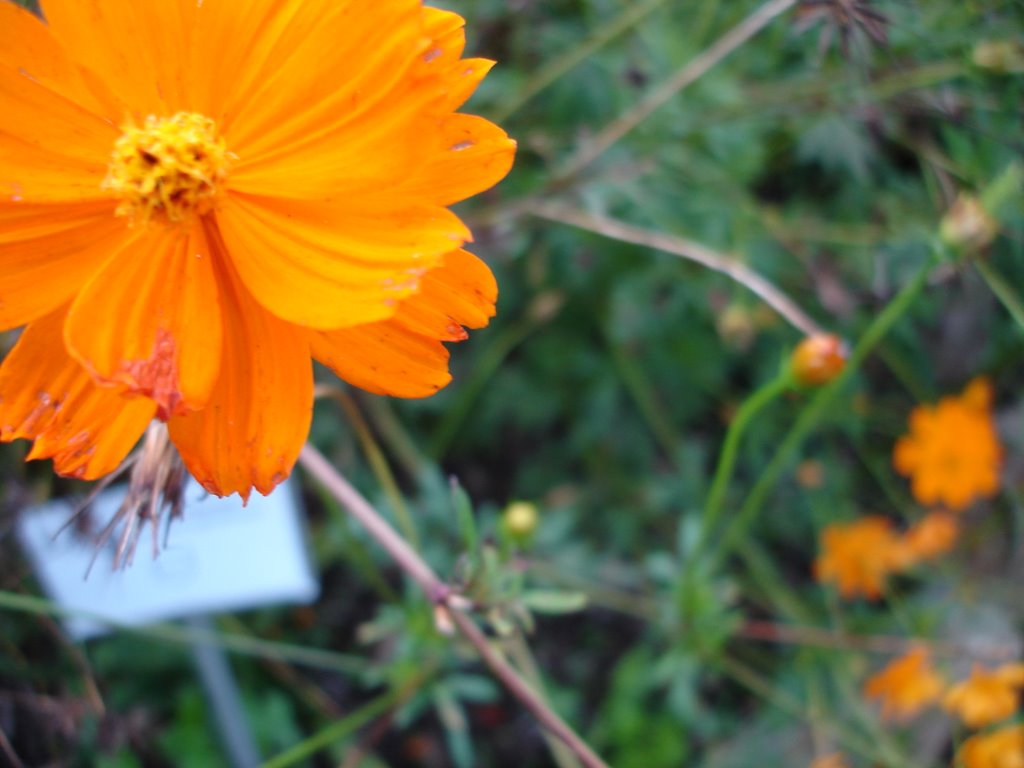
Once I was down by the cornfields, I decided to keep going and prowl around our environmental center a bit. The evening was cool and brighter than our day's overcast beginning could have promised, and there were sunflowers beckoning from near the center's driveway, and from within its grounds, and I do not resist sunflowers.


And once I was in the driveway, a student called out to me, introduced me to a kitten named Batman, and offered me a tour of the center's gardens. I would be able to offer many more pictures had I been shooting with my regular batteries; as it was, I had almost no power, which left me shooting nearly blind. This situation turned out to be just about right, though, given the quiet clamor of these blooms for the camera. We fumbled together, the flowers and I.


By the time I headed back to campus, past the reddening fields, over the river, and up the hill, I was almost myself again. And later this evening, lo and behold, I relocated my missing folder of notes from one of last semester's classes. Last week, I read this folder's disappearance as an ill portent. Perhaps all will be well after all.

The birthday of my life.


Today is my mother's birthday, which means that it is also the birthday of my possibility. I could want no other mother; I have never even liked another mother the way I like my own mother. She is the fiercest and loveliest of women, the best and most beautiful. She smells like joy and laughs merriment like brightened windowpanes. She put the feather pillows under my cheek and pulled the hot triangles and bright flower gardens and flannel stars over my shoulders. She put the love of red in my veins. She is the epitome of vivacity. Had she not consistently been her inimitable, tenacious self through my life, I would be a pale shadow of what I am. She set the bar high, and she set me reaching.

Happy birthday, Mama. I love you.

Turning to my other go-to poet.


At the end of this week, I am a photographic plate exposed to too much, blasted out in light so as to become completely featureless in the final development. I have sixty hours to regroup. The countdown is on.

And in the meantime, the beginning of the semester brings the young and the eager and the ardent and the suffering back to my door. We all lurch through this transition together, some of us gasping through more difficulty than others, gasping the more harshly sometimes because the difficulties go unspoken, or are shared with only a few. I think I am often one of those few, because I have a big, visible ear. We all have a talent, my mother told me when I was young. In the past three years, I have come to believe that one of my talents may be sympathetic listening. But free feeling in concert with others can have its own costs, its own worries and pitfalls and exhaustions.

And so, while the rain pauses and the loosened leaves fall to decoupage the pavement and a heavy fatigue settles over this cooling night, I let Ammons speak for me again, because I so often find that he has preceded me into the places where I find myself. Maybe it's something to do with that semester I spent using his office, sitting in his barcalounger, studying the lonely prints left on his walls. Maybe it's my own form of a delusion of grandeur, thinking that I'm anywhere in relation to this poet whose work I love.

from Garbage (part one)

I mean, take my yard maple--put out in the free
and open--has overgrown, its trunk

split down from a high fork: wind has
twisted off the biggest, bottom branch: there

was, in fact, hardly any crowding and competition,
and the fat tree, unable to stop pouring it on,

overfed and overgrew and, now, again, its skin's
broken into and disease may find it and bores

of one kind or another, and fungus: it just
goes to show you: moderation imposed is better

than no moderation at all: we tie into the
lives of those we love and our lives, then, go

as theirs go; their pain we can't shake off;
their choices, often harming to themselves,

pour through our agitated sleep, swirl up as
no-nos in our dreams; we rise several times

in a night to walk about; we rise in the morning
to a crusty world headed nowhere, doorless:

our chests burn with anxiety and a river of
anguish defines rapids and straits in the pit of

our stomachs: how can we intercede and not
interfere: how can our love move more surroundingly,

convincingly than our premonitory advice

-- A. R. Ammons

The escalator's broken heart.


In the Union Square Barnes and Noble, the night before I left New York, we looked for poetry handbooks. The literature is to the right of the escalator. I knew this. I know the layouts of major bookstores in major cities; it's one of the things I do. But in bookstores with other people, I get self-conscious, worried about whether I linger too long or seem to spend too much. I hurry too much. I doubt myself. We actually checked the store directory when we reached the third floor and still hadn't seen the fiction and poetry sections. They're on the fourth floor; I had been heading directly to them, drawn, pulled. I have haunted those sections before.

On the way back down the escalator, a few minutes later, I looked to my right and saw, affixed to the plexiglass barrier between escalator and open space above the third floor, the small black sticker with the small red broken heart on it. The black sticker looked almost like a word bubble from a cartoon. The broken heart was small enough that you might miss it in your passing, especially if you were occupied in some way that didn't involve looking around. "Oh," I said, "back there, there was a broken heart beside the escalator." She encouraged me to go back and take a picture. I was reluctant, hurrying and doubting myself, worrying that there was no time. She sent me back up the escalator; I had to limp to get there, having smashed my toe earlier in the afternoon. On the way back down, even with my camera drawn well in advance, I almost missed it.

Who affixes her broken heart to a transparent surface in a bookstore? Does he carry a packet of stickers around and defiantly leave one behind when the barriers get to be too solid? Do they travel together, plotting the best places to stick reminders for anyone who might have dismissed thoughts of a broken heart from her mind, from his hands?

Sung in stone.


The chapel bells, audible all through Gambier, toll only the hour from midnight on, until the daylight washes back. The quieting of the other bells, attendant on the quarter-hours all the rest of the day and early night, is meant to help the village sleep. The slow lownesses humming northward to my ear help me know I'm not asleep, that I'm still here, that the village is still here, that we are still rung round with each hung bell's bow swung finding tongue to fling out broad its name. One thing and the same, you see? What I do is me. For that I came.